Get better and be better: The hidden gem that is sports performance rehabilitation
You’re an athlete and, suddenly, you’re injured. You’ll miss practice time, maybe a few games.
You live to compete. To win.
So, you’re reeling, physically and mentally.
Still, you’ve vowed to take your physical therapy seriously, to listen to your clinicians, follow their leads and be ready to play as soon as your body is healthy again.
That’s great. It is.
But this is 2025. The technology and expertise available through physical therapy can lift you well beyond where you were when first injured. Play it right, and your rehabilitation can turn into a competitive advantage – a bright side to a disappointing diagnosis.
During a well-structured, well-instructed rehabilitation, you can overcome injury while becoming stronger and learning techniques that help you to remain healthy once you’re back in the grind.
Physical therapy isn’t single-pronged. And physical rehabilitation and sports performance aren’t mutually exclusive. Multiple components link the two. You just need a trained clinician who can get the most out of you and your health care plan.
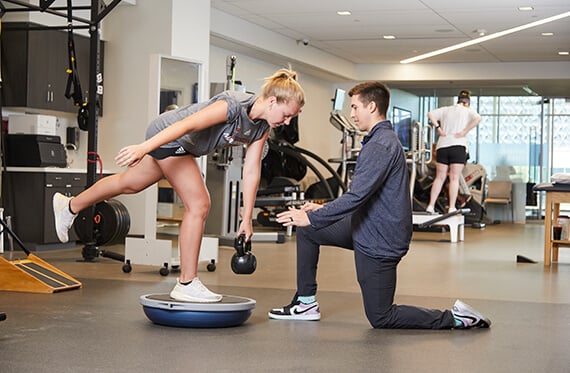
The initial step: A smart, proactive care plan
A common misperception about sports rehabilitation is that it’s passive – starting with a cool-down period to rest the affected area, followed by slowly ramping up activity to strengthen the healing body part.
Athletes are built differently, though. Their bodies need to be challenged and continually conditioned even if one section is on hiatus. Bodies adjust and regress if specific demands are lessened significantly, which makes returning to previous form a challenge if rehabilitation is more rest than work.
Phil Glasgow, a world-renowned sports performance physiotherapist said, “Rehab is training in the presence of injury.” That’s the mentality injured athletes, and the physical therapists and athletic trainers who treat them, must embrace.
It takes discipline to keep working when the goals aren’t the same and the timeline has shifted. But the dividends are well-documented.
Getting stronger and being better
It doesn’t matter if you are a football player, a swimmer, a golfer or excel in another sport. Being more powerful will help you improve your game, whether it’s blocking more ferociously, pulling through water more swiftly or striking a ball harder and farther.
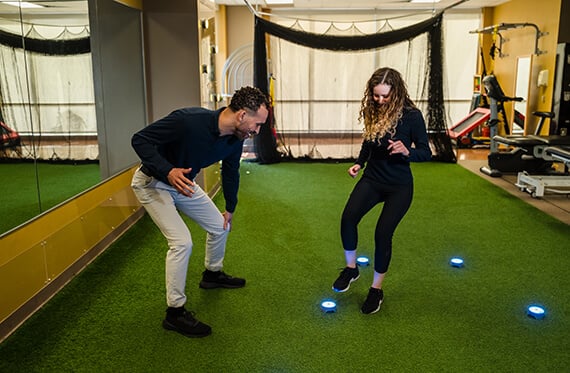
With the advanced technology now available in physical therapy centers, clinicians can better gauge strength and performance and establish plans to improve those factors during rehabilitation.
No longer do clinicians have to subjectively determine specific physical assessments based on the eye test or previous experience. Using tools such as dynamometers, force plates and other technology – which objectively record attributes such as muscle and grip strength, explosive force, movement and balance – physical therapists can quantify overall strengths and weaknesses and target those during rehabilitation.
It gives therapists a much better sense as to how their patients are proceeding toward a return to sport and how to fill any gaps an athlete may have that aren’t directly connected to the injury that’s being treated.
More time due to better data
Using objective data collection also can play an incredibly important role in the continuation of therapy once the initial round of sessions is completed.
For many of us, how long we stay in physical therapy depends on insurance companies and what they will allow. A clinician can suggest additional sessions will be beneficial for a patient, but if they don’t meet certain insurance parameters, that opinion may be dismissed.
However, if a clinician possesses clear, objective data that show how a patient is improving and how certain statistical levels have not been reached as discharging looms, a much better case can be made for continuing therapy.
With data in hand, a physical therapist can inform an insurance company definitively that, “Yes, the athlete is doing better, but his leg strength on his injured left side is still weaker than his right side, according to the data we recently collected. A few more weeks of physical therapy should close that gap.”
That kind of information can make the difference between a patient being ready to return to sport and being ready to excel on return.
Preventing further injury
Another key aspect of rehabilitation as training is future injury prevention. Obviously, strengthening the region surrounding a damaged area should help reduce the possibility of that injury recurring. Yet we know that isn’t always the case.
The chances of retearing an ACL after an initial knee surgery can be as high as 25% for high-intensity athletes and a recurrence of UCL elbow injuries in overhead athletes can reach 15% depending on the specific surgery.
Suffering these types of injuries can be demoralizing once. For an athlete to deal with the pain, anguish and recovery multiple times can lead to quitting a sport altogether.
Being afforded a continuum of care beyond an initial return to your sport is important. But there are also specific exercises, done consistently, that studies have shown can significantly reduce future injury in athletes, such as the Nordic hamstring curl to prevent hamstring strains and the Copenhagen hip adduction to prevent hip/groin issues.
Based on specific sport, injury and activity level, an experienced clinician will develop your care plan, including stretches and strength exercises, with an eye toward reducing the chances of a recurring injury. That’s why it’s important to seek certified professionals with a track record of physical therapy rehabilitation.

Taking responsibility for recovery
Although every athlete’s primary goal is to get back on the fields and courts, a physical therapist’s goal goes beyond simply playing again. It’s about keeping the athlete playing long-term and helping them perform better than ever.
That, of course, is triggered primarily by the athlete’s commitment to rehabilitation. You can work with the best physical therapists in the business, but it won’t matter if you don’t have the right frame of mind.
Will you do your home exercises? Will you go through the motions during your sessions or challenge yourself? Will you keep your exercise program going even when you are back to practicing and playing?
How you answer those questions will determine whether your injury rehabilitation is a resounding success.
It all starts with your mindset heading into your first week of physical therapy.
You can enter wanting to get healthy. Or, with the tools and technology available at our physical therapy centers now, you can enter wanting to get better and, ultimately, wanting to be better.
Clinical contribution to this blog provided by Mike Genco, sports physical therapist, and program coordinator for Select Sports Centers of Excellence.